
The Real Copper Truth
Read this once and you'll never see copper the same way again

I was observant as a child.
I knew there had to be a better way of living.
It seemed like every corner I looked… people were unhappy.
Unhappy with their careers, boss, spouse, children, colleagues, health, mornings, nights, everything.
This may just be the environment I was exposed to or what my mind gravitated towards, but something made me want to avoid this “default” lifestyle like the plague.
Complaining about the cards I was dealt wasn’t going to change my future.
Taking matters into my own hands was the only option.
Personal responsibility, self-education, and the pursuit of sovereignty is what I dedicated my sub-20-year-old life to.
If everyone was told to watch the news, go to college, get a job, retire at 65, and do as they’re told - would that not lead to everyone getting the same results?
Is that not the cause of this global unhappiness?
There was only one option: Do the exact opposite of everyone else.
While everyone glued their eyes to the TV, I drowned my mind in the information from people who were doing what I wanted to do, health coaches (who actually had results for it unlike most professors who teach something they’ve never done, they are taught to teach, not do).
While everyone sat on the couch after work, I went to the health e-books straight after school.
While everyone let toxic mainstream news flood their mind, I read books on hair and thyroid physiology and actualizing my full potential.
Before we begin:
This one is going to be long. Make sure you have the bandwidth and time to read it. I promise it will be worth it.
If you want to learn the ins and outs of thyroid health (that can’t be covered in one article), check out T3 Optimisation .
The Real Copper Truth
Humans need copper for high T3
Most people are aware of zinc for high T3, but copper is just as important. Zinc in excess can induce a copper deficiency and start to cause problems.
You might be consuming too little copper
Copper intake has been declining over the years and it appears that a large fraction of the population does not even consume the recommended daily allowance (RDA) for copper of 0.9 mg per day, let alone an optimal intake of copper (2.6 mg per day).
In the EU and in the UK, half of the adult population consumes less than the recommended amount of copper and in the USA and Canada, at least a quarter of the population consumes less than the estimated average requirement.
Other studies have found that over 80% of the population may get less than the RDA (0.9 mg/day) for copper from food. Around one-third of diets contain less than 1 mg of copper daily and 61% contain less than 1.5 mg with only 18% of diets exceeding 2 mg/day.
Thus, a marginal copper deficiency might be quite common.
Quick background on copper
Copper is an essential trace element in both humans and animals, and the recommended daily allowance (RDA) for copper in the normal sized human male is about 3mg/day.
It has multiple important functions in the human body, including oxygen transportation, photosynthesis, etc. Copper deficiency is also associated with thyroid problems, impaired growth, osteoporosis, and abnormal glucose and cholesterol metabolism.
But is copper deficiency actually a problem for most people? And is there any need for supplementation in the first place?
Answer: Severe copper deficiency is not that common, and people who eat balanced whole-food diets, should be able to meet their daily copper needs from dietary sources alone (oysters, kale, mushrooms, nuts, avocados, and fermented foods are all high in copper).
However, there are two very important facts about copper that you should take into consideration. Firstly, almost all kinds of dietary copper are poorly absorbed by the human body (30-40%).
And secondly, eating a lot of zinc depletes copper from the body (and vice versa). As zinc is known to boost T3 levels, many people tend to supplement with high-dose zinc supplements on a daily basis, without taking in any copper to balance that zinc-induced depletion (optimal ratio of zinc and copper is considered to be between 10:1 and 10:2).
If you supplement with 30 mg’s of zinc per day, then you should also take 3-6 mg’s of copper to balance out the zinc-induced copper depletion.
With that out of the way, we can finally get to the actual subject. Here’s why you don’t want to be depleted in copper.
lets get into this.
Copper on SHBG
Copper, by increasing ceruloplasmin, lowers SHBG. The sweet spot for ceruloplasmin seems to be around 35mg/dl, then SHBG is at its lowest.
Beef/lamb/veal liver is the best dietary source of bioavailable copper. Just 100g of beef/lamb liver will give you 9.8mg copper. If you’re trying to replenish a copper deficiency, consider eating 100-200g liver daily for 30-60 days and then check serum copper and ceruloplasmin.
If you’re worried about copper toxicity from liver, the body is very good at regulating the absorption of copper. If the body has had enough, it can downregulate absorption by 90%, thus preventing toxicity.
As a side note, if ceruloplasmin is not going up with increased copper consumption it might be related to low T3 and/or ACTH (and subsequent adrenal steroids)
More on T3 below, stick with me.
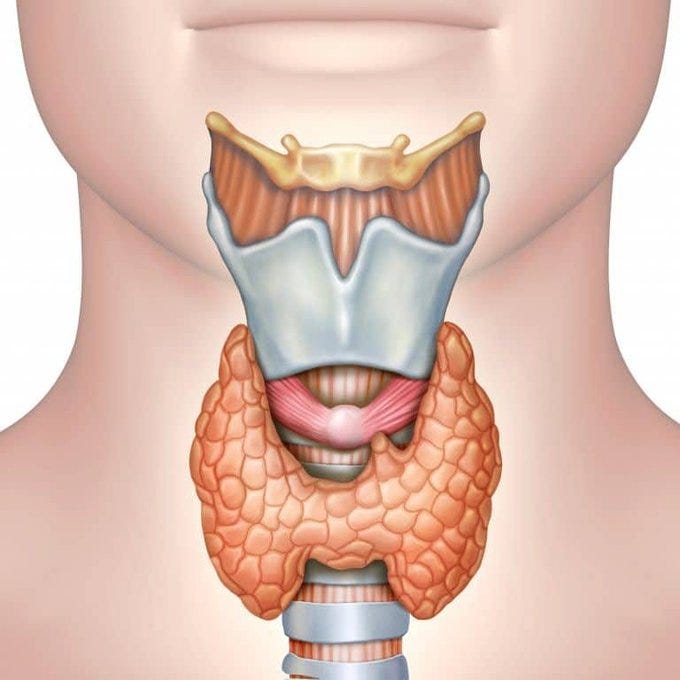
Copper on Thyroid
Low copper can lead to elevated TSH and reduced T4 and T3 and cold intolerance
It’s quite common for people to notice their cold hands and feet go away and they become more cold-tolerant when they start eating liver frequently.
Thyroid hormones are also important for testosterone production. There are thyroid hormone receptors in the testes, which stimulate steroidogenic enzymes.
Low T3 often leads to low LH and testosterone and suboptimal testosterone to estrogen and low DHT to testosterone ratio.
Copper on Testosterone
Copper is essential for testosterone production as low copper leads to low testosterone.
However, excess copper can lead to low testosterone as well, due to oxidative stress. The toxicity of copper is similar to iron and is associated with the production of reactive oxygen species (ROS) leading to peroxidation of the membrane lipids, protein oxidation, and nucleic acid breakage (DNA damage).
a) In rats, 1mg/kg/day of copper (0.16mg/kg human dose) significant increase in testicular steroidogenic enzyme activity resulting in a rise in serum testosterone and LH levels.
Higher doses of 2 and 3 mg/kg/day inhibited testicular 17beta-hydroxysteroid dehydrogenase (17β-HSD) activity and lowered testosterone production.
b) In this old in-vitro study, the researchers saw that when isolated hypothalamic cells were altered to chelated copper complexes, gonadotropin-releasing hormone (GnRH) increased by a nice 68%. As GnRH is basically the hormone that starts the whole cascade of events that lead to testosterone production, even a slight boost in it should increase testosterone levels. To what degree this happens when chelated copper is orally ingested? Hard to say.
c) Then there’s this other quite old in-vitro study, which found out that when isolated hypothalamic neurons were altered to chelated copper, luteinizing hormone (LH) release increased by 45%. As LH is the hormone that stimulates testosterone synthesis inside the ballsack, these findings furthermore support the theory that copper should increase testosterone production.
Copper likely helps to increase testosterone by:
Increasing LH
Complexing with GnRH-II, which stimulates the testes directly
Being a crucial part of the electron transport chain to assist in ATP production
Being a component of superoxide dismutase and catalase – two main antioxidant enzymes preventing fluctuations in ROS and protecting the cellular structure and function against oxidative damage.
It’s difficult to overdose on copper from food, unless zinc intake is low or someone hyper-absorbs and/or hypo-excretes copper.
Copper overload is most likely due to environmental exposure from air (e.g. workers in industrial factories), copper pipes, decaying vegetation, and from human activities like municipal solid waste management and fossil fuel burning, domestic wastewater, and mining wastewater.
Food isn’t what it used to be
Foods that are high in copper include beef liver and shellfish, both of which are not commonly eaten in the typical Western diet.
Muscle meats typically contain a high ratio of zinc to copper, up to 50:1, and consumption of large amounts could result in copper imbalance.
Organ meat, in contrast, has a zinc:copper ratio of about 2:1.
Alan Gaby, MD, stated that the “average copper content of fruits and vegetables declined by 81% between the years 1940 and 2000, presumably because of changes in farming methods that decreased the availability of copper in the soil” The reductions of copper in meat, cheese and other dairy products are also substantial (−55%, −91% and −97%, respectively) . Thus, our current dietary pattern as well as copper depletion in the food supply is undoubtedly contributing to the problem of copper deficiency.
That’s why it’s important to eat grass-fed meat and organs, as they will have higher amounts of nutrients. Venison is also a great option, since these animal feed on non-farm soils.
To make matters worse, the high consumption of fructose, a component of sucrose (table sugar), honey and fruit, can induce a copper deficiency in animals via impaired intestinal absorption. Since the average American consumes around 100 pounds of sugar annually, this may contribute to copper deficiency.
Markers of low copper
Low ceruloplasmin
Low leucocyte copper
Low transferrin saturation
Low T4
Low white blood cells, especially neutrophils
Low RBC and hematocrit
High cholesterol, LDL and triglycerides and low HDL
Fatty liver
High histamine
Low noradrenaline
Conclusion
In the view of this evidence, I would highly recommend you to keep your copper levels in check, either by eating a diet rich in whole-foods or by supplementing with bio-available chelated copper
What is the optimal dose for chelated copper you might ask? You can take either 2x the daily RDA (2 x 3mg’s) if you’re not supplementing with zinc. When you do supplement with zinc though, you can take some copper with it to balance out the zinc-induced copper depletion. For this you can follow the optimal human ratio of zinc and copper (10:1-2), meaning that if you take 30 mg’s of zinc, you also take 6 mg’s of copper (on top of the 2 x RDA).
All in all, copper is very important for T3 and testosterone optimization, so don’t be one of those people that under-consume it. Eat your liver!
Thank you for reading and enjoy the rest of your day.
-Moosa
ps. if you’re not upgraded to paid, you’re missing the deeper breakdowns.
check out what paid subscribers are reading
upgrade for £9/month and get access.

References:
1.https://openheart.bmj.com/content/5/2/e000784
2.https://pubmed.ncbi.nlm.nih.gov/21982501/
3.https://pubmed.ncbi.nlm.nih.gov/16249795/
4.https://www.researchgate.net/publication/48854258_Trace_Element_and_Mineral_Nutrition_in_Ischemic_Heart_Disease
5.https://pubmed.ncbi.nlm.nih.gov/9587151/
6.https://pubmed.ncbi.nlm.nih.gov/6378607/
7.https://pubmed.ncbi.nlm.nih.gov/16449843/
Be really careful with this, many women have a very high copper level these days and suffer from copper toxicity, especially since oestrogen and copper positively regulate each other. It is the reason for a lot of hyperinflammatory diseases. IUD’s both hormonal and copper can contribute to this, unbound copper is leached through copper piping and as a heavily redox active metal, it requires proper chelation, usually with a histidine or cysteine containing protein or peptide. The copper source is therefore also extremely important.