
Vitamin A Supplementation Guide
“When I learned that vitamin A would control my dandruff and acne, I then noticed that it also normalized my mouth membranes.” - Dr Ray Peat

“I got interested in vitamin A because I found that every time I worked outside in the summer, I got acne… But then one night I went to sleep reading with a very bright light shining in my face … and woke up starting to get pimples. And I suddenly realized that it was activating not only my retinal vitamin A system, but via my eyes it was activating my hormonal system and consuming vitamin A. And I found that in proportion to my sun exposure or light exposure, if I increased the vitamin A, I could prevent acne.” - Dr Ray Peat
Every person who wants high T3 needs a good amount of vitamin A.
Vitamin A, unlike the name indicates, is not a single compound. Instead its a blanket term for a group of active unsaturated molecules including retinal, retinol, and retinoic acids, along with multiple provitamin A carotenoids such as: α-carotene, β-carotene, lutein, and lycopene, which the human body can convert into active Vitamin A.
The recommended daily intake for vitamin A for a normal sized person is about 900-3000 μg/day of retinal, retinol, or retinoic acid, or about 12-24 times that of carotenoids since they have a significantly lower bio-availability in the human body and are also poorer sources of the active vitamin.
Vitamin A is also noted as one of the “24 essential vitamins & minerals for human survival”, and this is definitely for a good reason…
…Because without adequate amounts of vitamin A, you would slowly go blind, your immune system wouldn’t function normally, not to mention that you would also become infertile, and your body would have a really hard time absorbing dietary fat (which in turn would cause colossal damage all-around the body).
Vitamin A has been shown to increase T3 and dopamine sensitivity, lower excess cortisol and prolactin and just make you feel good - we’re going to discuss the best food sources, the benefits of vitamin A and effects on physiology, studies that rarely anybody talks about, vitamin A toxicity, plant vs animal vitamin A and most importantly how to supplement it correctly.
paid subscribers, let’s get into this.
free subscribers, click this if you’re looking to upgrade
or click the button below
paid subscribers gain instant access to:
Vitamin K2 Supplementation Guide
Vitamin E Supplementation Guide
How To Supplement Aspirin (Full Guide)
Magnesium Supplementation Guide
+26 more premium posts, in total there are 30 high quality premium posts at the time of writing , these posts will give you more truthful, relatable and useful knowledge than a medical degree possibly EVER could! ($450,000+ value)
insane offer if you ask me which you’re getting for the price of a cup of coffee. a cup of coffee will last you 30 minutes but this paid subscription will last you a whole MONTH (around 43,200 minutes depending which month it is) - absolute BARGAIN if you ask me, this isn’t a scam like some other people’s paid substack tier that I have witnessed - you’d be an absolute fool to reject this offer.
Once you see the quality and depth of the premium posts, you’ll remain a paid subscriber for much much longer - no doubt about it.
If you’re intelligent, wise and love to seek useful knowledge, now’s the time to upgrade and level up in knowledge and wisdom permanently - are you intelligent and wise enough to accept this offer?
You won’t regret accepting this. Click the button below when you’re ready and join 131+ paid subscribers right away (before a price increase.)
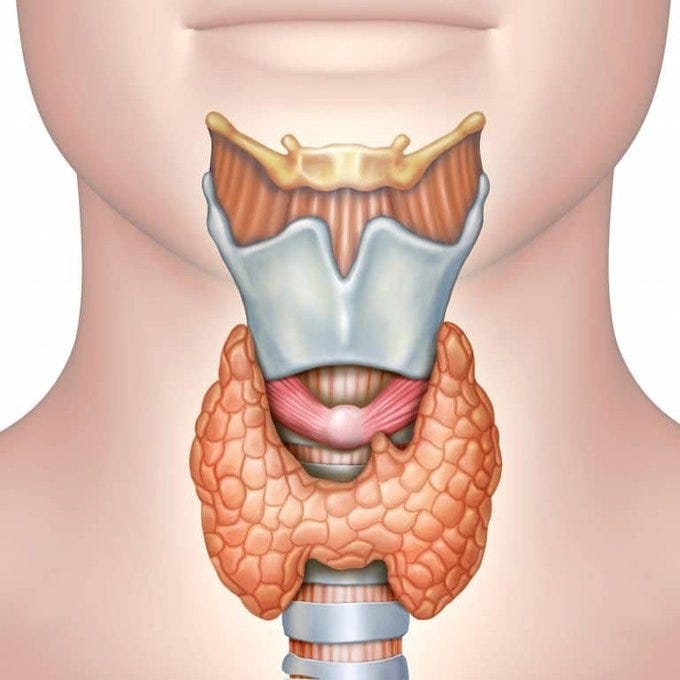
Vitamin A and thyroid hormones
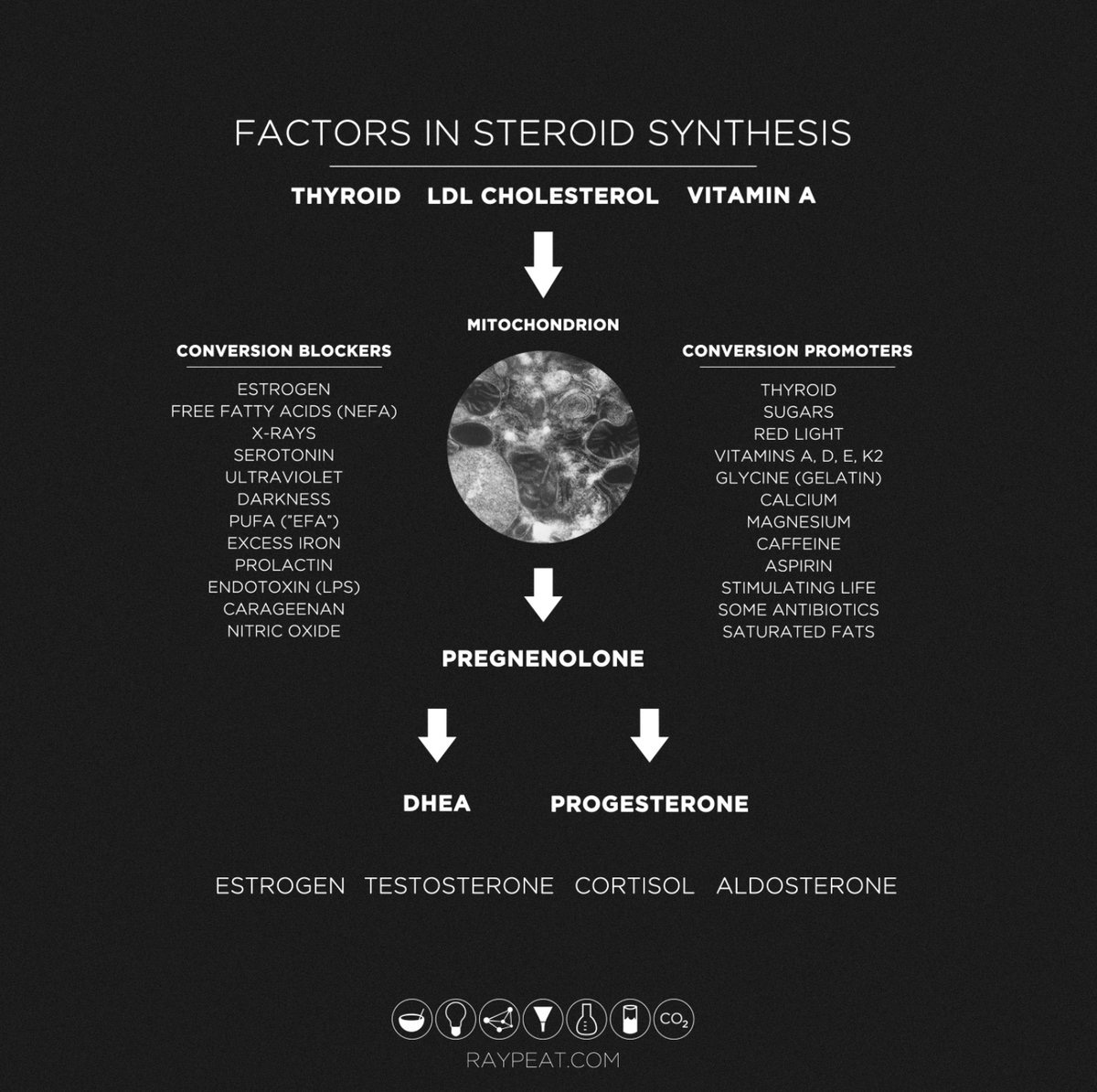
“Thyroid hormone and vitamin A (retinol) are used in the process of converting cholesterol into pregnenolone, the immediate precursor of progesterone and DHEA. Anything that interfered with these processes would be disastrous for the organism. The supply of cholesterol, thyroid and vitamin A must always be adequate for the production of steroid hormones and bile salts. When stress suppresses thyroid activity, increased cholesterol probably compensates to some extent by permitting more progesterone to be synthesized.”
- Dr Ray Peat
Vitamin A improves thyroid hormone function and hormone production.
Low vitamin A can lead to subclinical hypothyroidism and even goiter.
Vitamin A deficiency interfered with the pituitary-thyroid axis by:
Increasing the synthesis and secretion of thyroid-stimulating hormone (TSH) by the pituitary gland
Increasing the size of the thyroid gland
Reducing iodine uptake by the thyroid gland and aggravating thyroid dysfunction caused by iodine-deficient diets
Impairing the synthesis and iodination of thyroglobulin (precursor to thyroid hormones)
Impairing conversion of T4 into
…thus leading to hypothyroidism.
What is subclinical hypothyroidism? Most of the time hypothyroidism is defined by your TSH level and optimal TSH is between 0.3 and 2.5 mIU/l (R). So anything over 2.5 and under 4 is subclinical hypothyroidism. A TSH over 4 (together with low T4) is classified as hypothyroidism.
Vitamin A can help with that.
In this study, 25,000 IU/d retinyl palmitate for 4 months decreased TSH and T4 and increased T3.
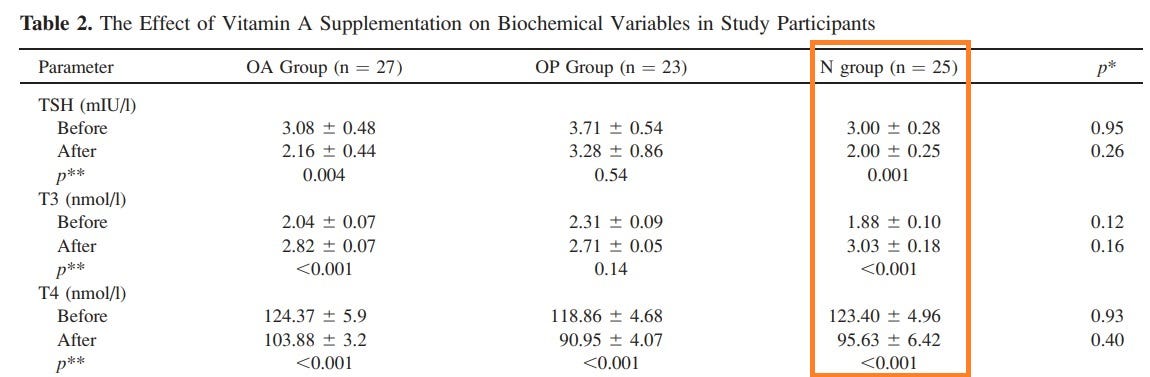
As you can see in the graph, TSH took a good drop and T3 a good increase with vit A supplementation. OA = obese + vitamin A supplementation. OP = obese + placebo. N = normal weight + vitamin A.
Not bad improvements for just 1 vitamin right? Now imagine stacking it with other essential thyroid nutrients, such as zinc, selenium, iodine, etc. Or better yet, eating food rich in those nutrients.
Vitamin A and goiter
When TSH overstimulates the thyroid it can lead to goiter.