
Vitamin K2 Supplementation Guide
“The Japanese have done studies using just vitamin K, and very high doses of it, very effectively rebuild osteoporotic bones while taking calcium out of arteries in their animal studies."- Dr Ray Peat

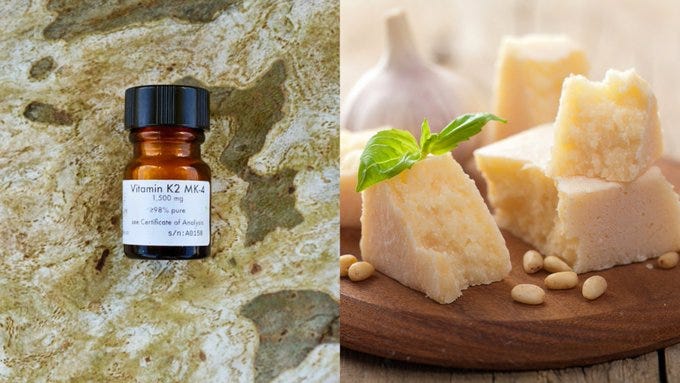
Vitamin K, the last fat soluble vitamin discovered, exerts unique and extremely important functions in the body. Vitamin K works in synergy with the other fat soluble vitamins, A, D and E. Although it’s a fat soluble vitamin, the body cannot store large amounts of it, and it gets used up quite quickly. Hence, frequent and adequate dietary K2 consumption is required to maintain optimal levels in the body.
Low levels of vitamin K1 (phylloquinone) is found in many green leafy vegetables as well as a little in olive oil. Beta-carotene is a direct indicator for vitamin K1 in green leafy vegetables. Humans can convert some of the K1 to form the K2 (menaquinone, MK-2 to MK-14), via intestinal bacteria and also an enzyme called UBIAD1, but this conversion is very small and ineffective.
Animals that eat the vitamin K1 rich plants convert the K1 to K2 with their intestinal bacteria, as they are much more effective in this than humans. The K2 is then stored in their tissue, such as organs and fat, as well as in their milk. When the milk is then used to make butter, the color of the butter indicates the amount of beta-carotene and indirectly the amount of K2. The more yellow to orange the butter is (sign of beta-carotene), the more K2 is present. Although, when the animal is able to convert the beta-carotene to retinol, the butter made from their milk will be white, but it still contains significant amounts of K2. Likewise, when cows are given corn, their butter may also be more yellow, but can contain no K2, but only free range animal products will contain significant amounts of K2. Other animal sources such as their liver, pancreas, brain, kidney and dairy also contain good amounts of MK-4 (form of vitamin K2), whereas fermented foods, such as natto and sauerkraut, are higher in MK-7 (form of vitamin K2).
Vitamin K (both K1 and K2) helps with blood coagulation (thickens blood), is anti-tumor, anti-calcification, supports adequate growth, aids in bone-formation and promotes insulin-sensitivity (by keeping pancreas healthy, increasing adiponectin and improving glucose tolerance).
Vitamin K2 also plays a very important role in the immune system. Lymph glands and bone marrow accumulate large amounts of it and a vitamin K-dependent protein called gas6 plays a role in phagocytosis (the process when immune cells destroy and consume foreign cells or the body’s own cells when they are infected or no longer needed, or simply put, good cells eat bad cells), exerts remarkable anti-proliferative effects on cancer cells, and protects against apoptosis (cell death).
free subscribers, this is as far as you get.
you know what vitamin K2 is now. you don’t know how to supplement it yet.
the practical breakdown is below. bone health mechanics. healing signals. nutrient interactions. selecting your supplement. food sources of vitamin K2. hormonal mastery.
£9/month for life. this price won’t last.
paid subscribers let’s get into the physiology behind vitamin K2
Improves bone, joint and artery health
“...you're protecting your arteries and building your bones when you have adequate vitamin K, and both aspirin and vitamin K are known practical bone-building supplements.”- Dr Ray Peat, PhD
Vitamin K acts as a cofactor in the conversion of glutamate into Gla (gamma- carboxyglutamic). Gla-containing proteins, MGP and osteocalcin are involved in collagen matrix formation and calcification of the bones, respectively.